In the high-stakes arena of today's serious sliding, podium finishes is far more than exclusively a product of brute horsepower or behind-the-wheel bravado. Instead, it has become a complex science which demands a scrupulous fusion of selecting a proven chassis, outfitting it with the highest-quality drift-spec hardware, and, most critically, comprehending its dynamic characteristics on the track through sophisticated suspension tuning applications. This definitive handbook acts as your roadmap starting from the initial concept of a competition vehicle through to the last data-informed adjustments that elevate a powerful vehicle into a repeatable champion. We will delve deep into the methodical process of vehicle alignment optimization, demonstrating how a modern suspension tuning tool like GripDial eliminates guesswork and delivers exceptional clarity into your chassis's real-world performance.
The foundation of any successful drift car is, undoubtedly, the chassis itself. Certain platforms have achieved iconic reputation within the international oversteer scene due to their natural weight distribution, strong design, and the enormous ecosystem of specialist components available. Choosing the right starting point is the initial and most important decision a enthusiast will make. For instance, the the E36 generation BMW is widely regarded as one of the finest overall cars for drifting of all time. Its near-perfect balanced front-to-rear weight, coupled with a RWD configuration and robust inline-six powerplants, establishes a car that is both forgiving for beginners and incredibly effective in the hands of a expert pilot. The next step of this concept, the BMW E46 platform, builds upon these qualities with a increasingly refined frame, broader wheel track for improved stability, and still more steering angle straight from the manufacturer. A distinct formidable contender in the professional arena is the C6 generation Corvette.
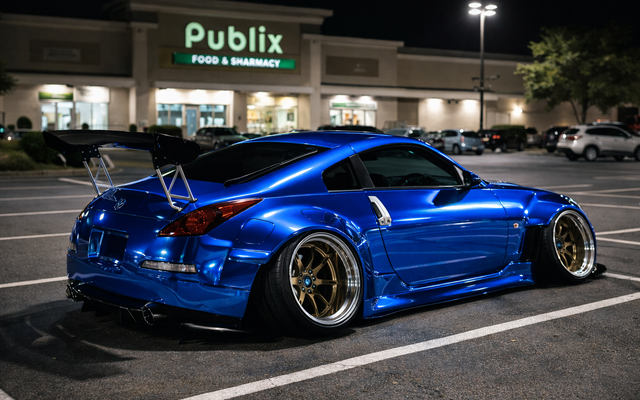
This muscle-derived performance car offers a distinctive combination of strengths to the sideways discipline, including a light alloy frame, a backwards-positioned transaxle that contributes to an excellent front-to-rear mass ratio, and the colossal torque of a big LS V8 motor. This blend renders it an complete monster on track, capable of starting and sustaining long slides with seemingly effortless application of throttle. For those seeking exceptional value, the 350Z model Nissan stands out as a top-tier choice. It comes from the manufacturer with a rigid chassis, a competent OEM locking differential, and the free-revving VQ series motor that offers ample horsepower and torque for mastering and progressing in the activity. Its newer version, the 370Z model, brings more advancements in structural rigidity, handling precision, and peak engine performance, establishing its position as a popular selection among serious drivers. Further legendary vehicles that deserve attention are the agile Wankel-engined Mazda FC RX-7, the most popular S13 Silvia/240SX, the V8-powered SN95 generation Mustang, the more recent BMW E90, and the tiny yet surprisingly fun and instructive MX-5 Miata. Each of these cars gives a unique set of characteristics, complexities, and capabilities, but they all share the basic elements required to be transformed into a serious drift car.
However, choosing the optimal car is merely the first step. To unlock the complete potential of every of these cars, significant upgrades to the steering and chassis control systems are absolutely non-negotiable. This is where the world of performance tuning parts comes into critical importance. The single most impactful modification for a serious drift machine is the fitting of a drift-spec angle modification kit. These advanced kits, like those manufactured by performance brands like specialist manufacturers, are created to radically increase the car's possible steering angle. A factory production vehicle is extremely limited in how far its steering tires can turn, a design limitation for public road driving. In sliding, however, aggressive steering input is frequently necessary to catch and hold a angle. An steering kit exchanges the OEM hubs, tie rods, and potentially suspension arms with parts that enable the wheels to attain steering lock beyond 70 or even 80 degrees, as opposed to a average factory angle of around 40 to 50 degrees.
This tremendously expanded lock provides the operator with dramatically more command during a angle, allowing it to be far easier to start a drift, maintain it through a sweeping corner, and transition smoothly from one angle to the other. The contrast in controllability is nothing short of profound. Combined with a properly specified steering kit is the equally vital modification to the car's suspension. Generic or even high-end road coilovers are just not designed for the particular and brutal requirements of competitive oversteer. A purpose-built system of adjustable dampers is of utmost importance. These specific suspension components feature specific piston tuning and spring rates that are tuned for the extreme weight transfer that is characteristic of sliding. When a operator begins a drift, the car's weight is shifted violently to the outside of the corner. Correct performance coilovers control this movement in a controllable way, enabling the vehicle to find its balance rapidly and providing the operator accurate feel through the controls and driver's seat. They also enable exact tuning of stance, damping stiffness, and corner weighting, which are all integral parts of fine-tuning the vehicle's handling to a specific track or competition approach. As a system, a top-tier angle modification system and a properly chosen pair of competition coilovers constitute the undeniable mechanical foundation upon which all subsequent refinement is based.
Once the essential components is in place, the subsequent critical phase in the build is the meticulous adjustment of the chassis's wheel angles. This is the world of vehicle alignment optimization, a methodology that can seem daunting to the uninitiated but is, in fact, the defining factor to transforming a collection of high-performance parts into a harmonious and predictable vehicle. The most critical element of tuning for drifting is undoubtedly negative camber. Camber angle is the inclination of the wheel relative to the perfectly straight plane when viewed from the forward of the car. If the top edge of the wheel is angled towards the chassis, this is known as negative camber. For oversteer driving, inward-leaning wheels on the front tires is universally employed and is seen as critical. The reason is intrinsically related to vehicle dynamics.
When a chassis is turning at extreme angles, the chassis rolls towards the outer of the corner. This lean makes the outside front wheel to reduce its best contact patch with the tarmac. By introducing negative camber, the wheel is pre-angled to compensate for this lean. As the chassis rolls into the corner, the outside front tire becomes more upright with the road surface, maximizing its traction at the critical moment when it is most required for control. Usually, front axle camber settings for a dedicated sliding vehicle fall between approximately -3 degrees to as high as -5 degrees or even beyond, based on the parameters of the vehicle configuration, compound choice, and driver style. The back wheels also use negative camber, but the angles are usually more modest and more nuanced than the front. Overly aggressive negative camber at the rear can cause the vehicle to excessively prone to oversteer and challenging to manage on power input, as it diminishes the available grip area of the powered wheels during straight-line throttle application. Thus, rear axle camber settings are frequently in the ballpark of -1 degree to -3 degrees, striking a careful equilibrium between giving adequate lateral traction to assist in entering and sustaining the angle while simultaneously keeping usable traction for power-down the corner. camber angle is only one part of the broader suspension geometry equation, which additionally encompasses toe, caster, and bump steer adjustment.
Toe describes the angle of the tires when looked at from the top. Inward toe means the front edges of the tires are closer together than the rear edges, while toe-out means the opposite. For drifting, a modest amount of front axle toe-out is commonly run to sharpen the initial steering reaction, making the vehicle feel more agile and willing to start a oversteer moment. Rear axle toe is typically set to zero or a incredibly slight amount of inward toe to encourage straight-line stability under acceleration. caster angle is the longitudinal or aft tilt of the steering axis when looked at from the side-on of the vehicle. More caster angle enhances self-centering and stability stability, and it also boosts negative camber effect during turning, which is very useful. Tuning these suspension engineering parameters is a detailed dance where a adjustment to a single setting can and often will affect the remaining parameters. The old-school process for dialing in a vehicle's suspension geometry for competition has long been a time-consuming affair of experimentation and feeling. A driver or crew would introduce a adjustment based on intuition, run the car on track, use the pilot's individual sensation and comments, and then introduce another adjustment. This cycle would continue over and over until the car felt "right" or the scheduled practice period ran out. This methodology is not only extremely slow in terms of man-hours and tires, fuel, and parts, but it is additionally deeply imprecise.
Human feel is a infamously unreliable data source, affected by many factors such as tiredness, varying track conditions, weather, and just the focus of the driver on that given day. What feels "oversteery" on one lap might feel "tight" on the subsequent pass, leading to confusing feedback and frustrating tweaks. This traditional challenge in vehicle dynamics optimization is precisely where modern telemetry systems has stepped in to completely change the process.
The rise and integration of sophisticated vehicle dynamics tools has introduced a new age for tuning and perfecting competitive drift machines. This new generation of platforms, represented by cutting-edge systems like GripDial, function by physically capturing the real-time physical performance of the car as it is being driven on the circuit. Unlike depending on subjective impression, these tools collect objective metrics on essential variables such as shock absorber movement, individual tire rotation, lateral and longitudinal g-forces, wheel angle, and throttle and brake position. This raw telemetry is then processed by sophisticated software that can graph and decode the metrics in a actionable format. For the first time ever, engineers and teams can observe specifically what the chassis is performing at any given point of a slide. This capability transforms the whole suspension tuning workflow. Imagine the specific goal of dialing in the front negative camber for a given car. Instead of applying a adjustment from -3 degrees to -3.5 degrees and then running many passes to try and "perceive" a difference, a telemetry system can deliver real-time and irrefutable information. The software can indicate in a chart how the wheel's contact patch is performing during the key stages of a slide: initiation, holding the angle, and transition. It can show if the existing camber setting is enabling the outside front tire to maintain ideal loading or if the compound is overloaded on its outside edge.
The car alignment tuning tool can then make fact-based advice for modification. Perhaps the information reveals that the tire is even overloading its outer shoulder at -3.5 degrees of negative camber, implying that a move towards angle, say -4 degrees, might be warranted. Alternatively, the information might reveal that the tread is failing to achieving heat or suspension engineering that the inside edge is wearing too quickly, which could point to that there is excessive inward lean and a small decrease back to -3.2 degrees would be more optimal. This standard of accuracy and practical intelligence was simply unattainable in the era of solely seat-of-the-pants tuning.
The effect of using a advanced drift telemetry system extends far beyond only optimizing camber angles. It becomes an priceless coilover setup tips that is tailored to your exact chassis. When fine-tuning the shock absorber settings on your suspension, rather than relying on imprecise tips or copying another car's settings, you can employ the telemetry to see how the vehicle is reacting in reaction to your tweaks. The software can display the wheel movement trace over a run, highlighting if the shocks are managing the chassis motion effectively or if they are permitting the chassis to bounce too much after a flick. It can help in identifying issues like bottoming out or excessive extension, enabling you to make data-backed decisions to preload settings, rebound/compression values, or ground clearance. This process extends equally to the detailed process of suspension geometry optimization. Beyond camber angle, the tool can offer data into how adjustments to toe and caster angle are influencing the chassis's handling during various phases of a slide. For example, it can allow you to find the best amount of front axle toe out for your particular angle kit configuration and piloting technique by measuring the quickness of initial response and the predictability of the chassis at maximum steering angle. This turns the software an extremely useful drift suspension tuning guide that is constantly calibrated by the real-world dynamics of your own chassis on the track. It shifts the entire process from a dark art into a methodical development process.
Additionally, the value of a system like data acquisition is not restricted to professional tuners with large budgets. For the grassroots driver, it functions as an amazing equalizer. It effectively offers the driver with the insight of a expert race engineer without requiring the corresponding expense. It accelerates the development time by delivering unambiguous solutions to problems that would normally take seasons of experience to answer. A driver can learn how their specific chassis reacts to various inputs, developing a more profound knowledge of vehicle dynamics in the process. It additionally makes accessible professional chassis dynamics principles, permitting every enthusiast with the desire to optimize their car to do so in a systematic and productive way. This is particularly important in a sport like drifting, where engineering knowledge has in the past been a highly secretive asset among top crews. Now, that power can be in the garage of any motivated driver.
In conclusion, the path to engineering and optimizing the ultimate competitive drift machine is a comprehensive endeavor that smoothly combines classic engineering wisdom with cutting-edge digital tools. It begins with the strategic selection of a legendary chassis, then built upon the application of essential competition components like high-performance drift angle kits and correctly valved competition coilovers. The journey then moves into the detailed stage of car suspension tuning, where settings like camber angle, toe, and caster are precisely set to match the car's new geometry and the driver's individual technique. Finally, and what genuinely separates the contemporary methodology from the past, is the integration of a sophisticated drift telemetry software. This tool removes the uncertainty and trial and error of only subjective tuning by providing objective, real-time information on how the vehicle is truly behaving. It serves as an incredible diagnostic aid, a definitive coilover setup manual, and a comprehensive performance analyzer. Together, this complete methodology ensures that each and every component of the drift car—from the pick of the chassis to the last adjustment on the damper—is optimized for peak competitiveness on the circuit. It signifies the complete maturation of the discipline of drifting, connecting mechanical pilot talent with data-informed suspension engineering to create the most dominant vehicles attainable.